
White Anti-Crack CSA Cement 62.5 (GGBFS)
White CSA Cement 62.5 for Decorative, Flooring and Corrosion-Resistant Mortar Systems
White Anti-cracking GGBFS CSA Cement 62.5 is a hydraulic cementitious material for high-end decoration, floor projects, special mortars and chemically aggressive environments.
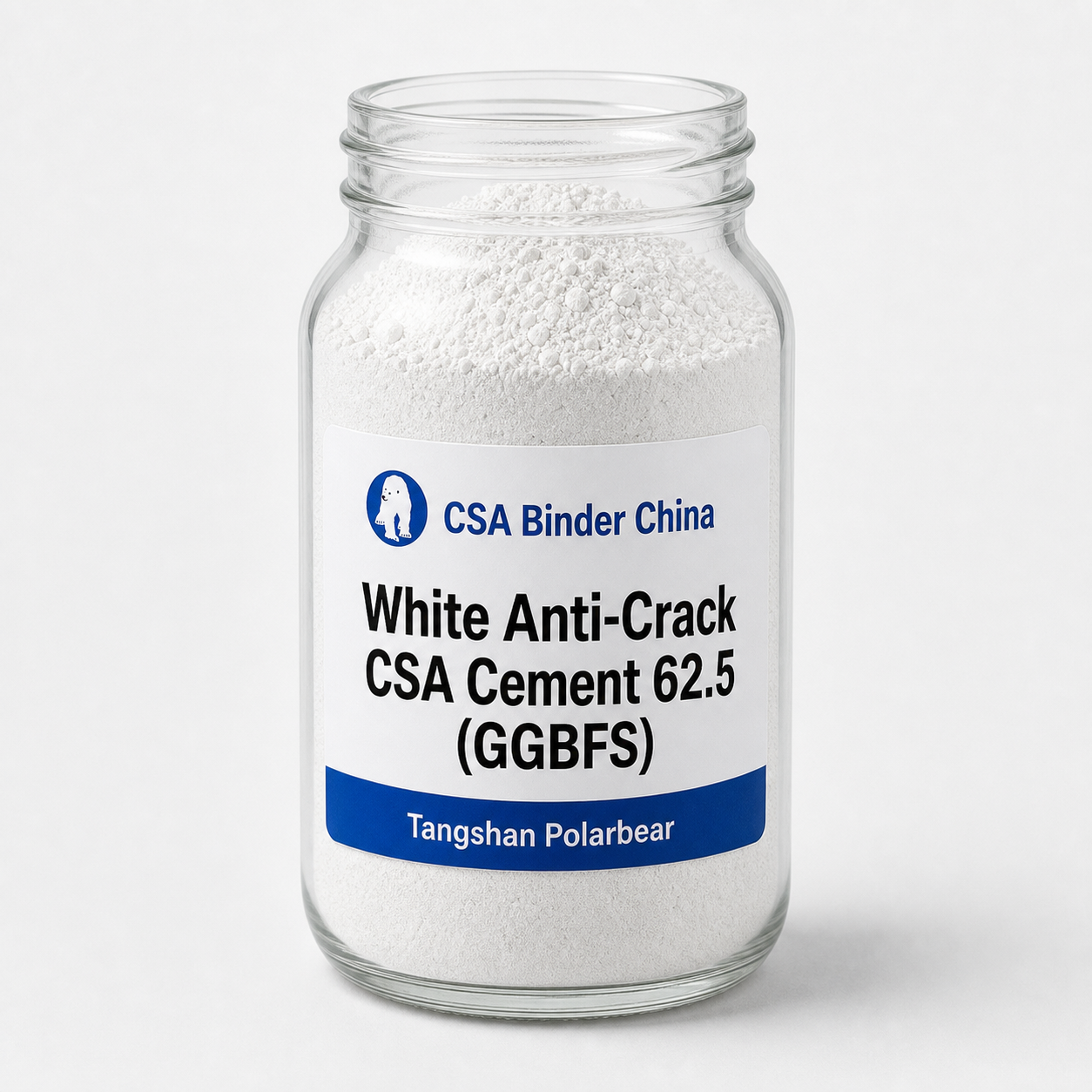
Product Positioning
- White CSA cement 62.5 direction
- Decorative and flooring systems
- Corrosion-resistant application approach
- Special mortar formulation support
Product Overview
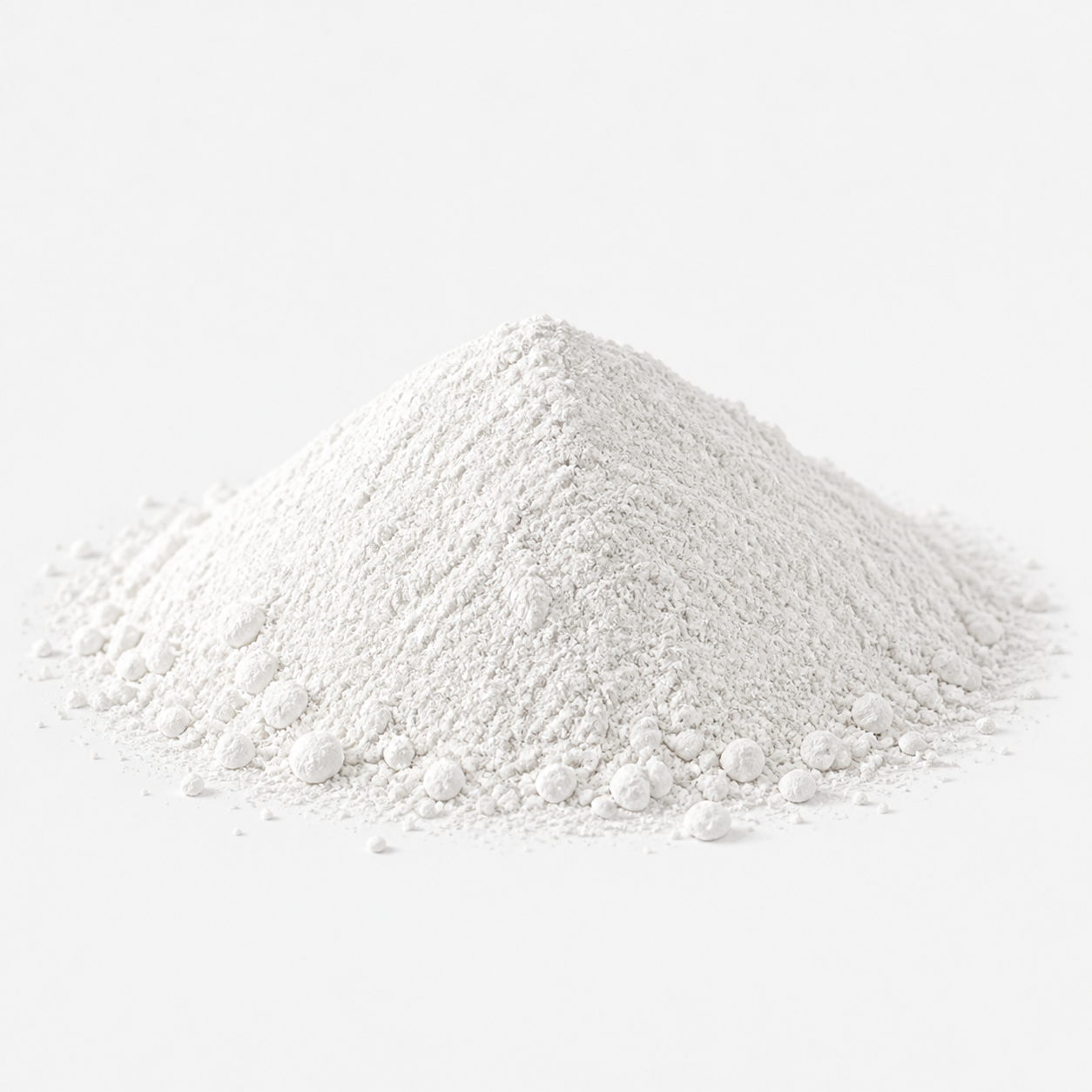
Quick answer: White Anti-Crack CSA Cement 62.5 is a high-strength white sulphoaluminate cement blended with GGBFS, combining a 62.5 strength grade with high whiteness and crack resistance. Typical data: 28-day compressive strength 62.5 MPa (3-day 25.0 MPa, 7-day 45.0 MPa), Hunter whiteness ≥87, Blaine fineness 350 m2/kg, initial set ≥45 min, and controlled free expansion (in water ≤0.15% at 28 days). It suits white decorative concrete, UHPC and architectural precast.
White Anti-cracking GGBFS CSA Cement 62.5 is a hydraulic cementitious material made from low-iron calcium sulfoaluminate and dicalcium silicate clinker, GGBFS and gypsum according to supplied product information.
It is positioned for high whiteness, high strength grade, crack resistance design, corrosion resistance approach and low hydration heat behavior. It can be discussed for high-end decoration, renovation projects, floor systems, special mortars and concrete in chemically aggressive environments. Final performance depends on formulation design, raw materials, water amount, additives, curing condition and application method. For this white GGBFS CSA cement, low-carbon positioning should be reviewed together with supplied product information, project specification and the buyer’s latest TDS requirements.
Key Benefits
Low carbon cement (low CO2 / sustainable)
According to supplied product information, the material is positioned as a low-carbon cementitious option. Carbon-related data should be confirmed with the latest TDS before project specification.
High Whiteness
High Strength Grade 62.5
Crack Resistance Design
Sulfate and Acid Corrosion Resistance Approach
Low Hydration Heat Direction
Decorative Surface Quality
Typical Applications
UHPC Decorative Components
High-Strength GRC Decorative Products
Artistic Concrete
Artistic Facades and Sculptures
3D Printed Buildings
White Concrete Walls
Decorative Panels
Inorganic Self-Leveling Floors
Colored Terrazzo Floors
Food Workshop Floors
Marine Engineering
Chemical Storage Tanks
Sewage Pipes
Anti-Crack Mortars
Decorative Mortars
Repair Mortars
Tile Adhesives
Tile Grout
Large-Sized Concrete Components
Large-Volume Concrete
Typical Technical Data
Typical values from supplied product information.
| Item | Typical Value / Supplied Information |
|---|---|
| Strength grade | 62.5 |
| Compressive strength | 3 d 25.0 MPa; 7 d 45.0 MPa; 28 d 62.5 MPa |
| Flexural strength | 3 d 4.5 MPa; 7 d 8.0 MPa; 28 d 10.0 MPa |
| Blaine fineness | 350 m²/kg |
| Hunter whiteness | >=87 |
| Setting time | Initial >=45 min; final <=600 min |
| Soundness | Boiling test qualified in supplied information |
| Free expansion rate 28 d | In water <=0.15%; in air >=-0.10% |
| Additional supplied characteristics | Hunter whiteness around 88 or above; supplied 28 d compressive strength range 67.5-72.0 MPa; supplied 28 d shrinkage rate 0.05%-0.09% |
| Hydration heat note | Supplied document includes hydration heat information; unit should be confirmed by latest TDS before quotation use |
The above values are typical data from supplied product information. Final performance depends on formulation design, raw materials, water amount, additives, curing condition and application method.
Directions for Use / Formulation Reminder
- Use as a white special cementitious material within a verified formulation.
- Trial mix should confirm working behavior, whiteness, strength target, shrinkage behavior, curing and surface quality.
- For corrosion-resistant or aggressive environments, confirm test method, exposure condition and formulation design before project use.
- For decorative products, control aggregate color, pigment compatibility, water quality, curing and finishing process.
- Technical values should be confirmed by latest TDS before formal quotation or specification use.
Packaging and Storage
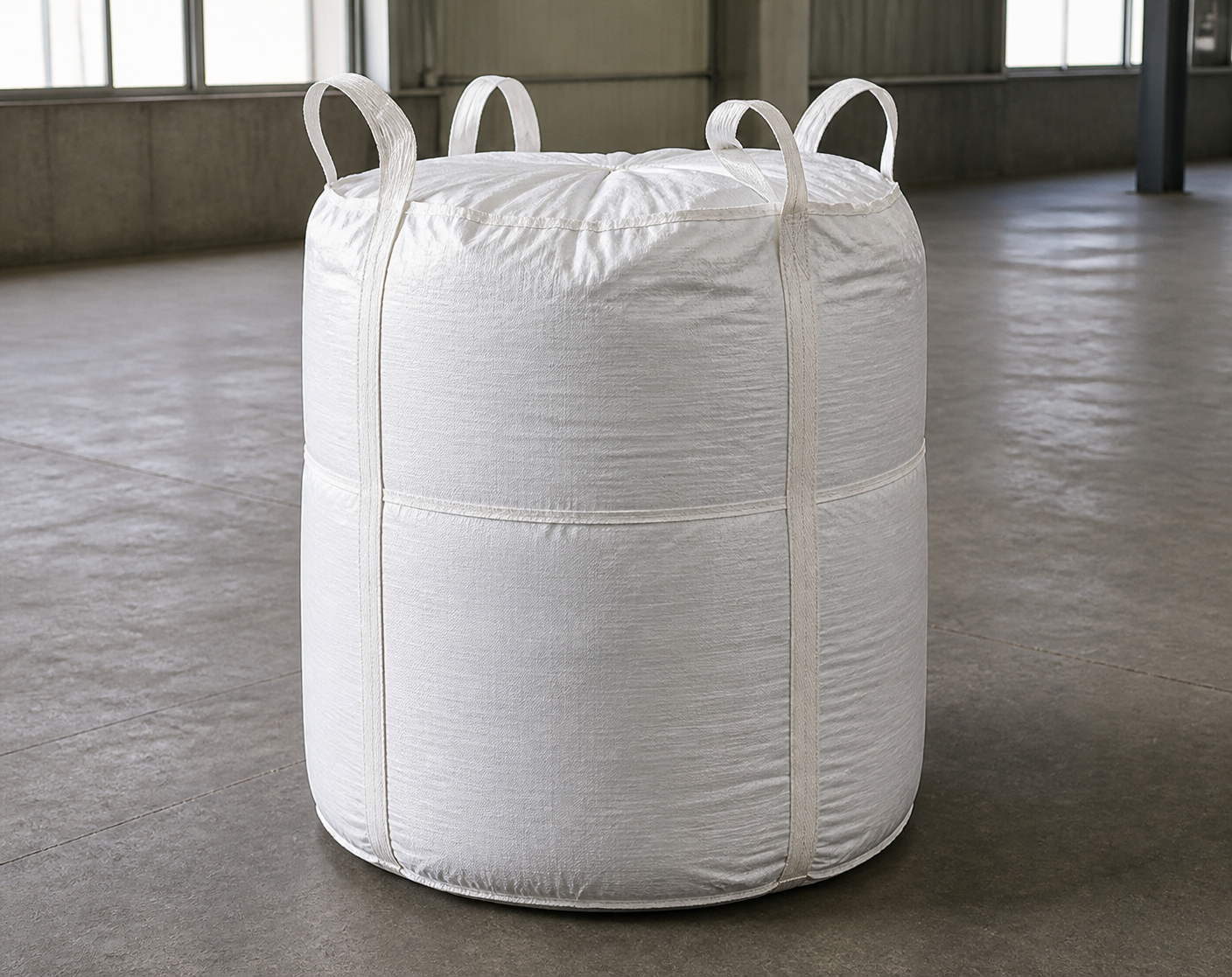
Common packaging directions include 25 kg bags and 1,000 kg jumbo bags / bulk bags. Store in a dry, covered and well-ventilated place. Protect from moisture and rain. Final packaging, palletizing, labeling and export documentation should be confirmed before order.
Related Products
CSA Binder
View ProductCSA Cement
View ProductBelite Cement
View ProductWhite Fast Hardening Crack-Resistant High-Belite Sulphoaluminate Cement
View ProductCustomized Mortar Solution
View SolutionRelated Solutions
Self-Leveling Compound Solution
View SolutionShrinkage Compensation Solution
View SolutionCrack Control Waterproof Mortar Solution
View SolutionC40/C50/C60 Mortar Solution
View SolutionFAQ
Is this a finished mortar product?
It depends on the product type. Binder and component products are used in formulation systems, while premix or mortar products still need project and application verification.
What information should I provide before requesting samples?
Please send your application, target performance requirement, local raw materials, water control needs, packaging requirement and destination market.
Does final performance depend on formulation?
Yes. Final performance depends on formulation design, raw materials, water amount, additives, curing condition and application method.
Discuss White Anti-cracking GGBFS CSA Cement 62.5
Send us your application, target performance requirement, local raw materials, packaging requirement and destination market. We will suggest a suitable product path for sample discussion and testing.
Send Your InquiryMechanism Explanation
White Anti-cracking GGBFS CSA Cement 62.5 should be evaluated as part of a complete cementitious system. Its effect is influenced by binder chemistry, sulfate balance, calcium source, water amount, aggregate grading, additives, curing condition and application method. For dry mix mortar and concrete-related products, trial testing should confirm setting behavior, workability, early strength target, shrinkage-related performance and final application suitability before commercial use.
Additional FAQ
Can this product be used without formulation testing?
No. Final performance should be verified by trial mix and testing because local raw materials, additives, water control and curing conditions can change the result.
Can you help compare this product with other binder options?
Yes. We can discuss the application, target performance requirement, local material information and packaging needs before suggesting a suitable product path for sample discussion.